Product
Every capability, honestly badged.
36 capabilities in five families, each with the mechanism that makes it hold. Where a capability is real but has documented gaps, it says Partial.
How records connect
Each record links to the one that caused it. These are the links the system writes for you.
What feeds each record
- Quality event
- Inspection lot · raised
- Nonconformance
- Quality event · escalated
- Complaint · converted
- Inspection lot · opened
- Supplier · named
- Audit finding · raised
- CAPA
- Quality event · escalated
- Audit finding · raised
- Nonconformance · created from
- Change request
- Quality event · escalated
- Audit finding · raised
- Nonconformance · created from
- CAPA · created from
- Training
- Document · assigned
What feeds each record
- Quality event
- Inspection lot · raised
- Nonconformance
- Quality event · escalated
- Complaint · converted
- Inspection lot · opened
- Supplier · named
- Audit finding · raised
- CAPA
- Quality event · escalated
- Audit finding · raised
- Nonconformance · created from
- Change request
- Quality event · escalated
- Audit finding · raised
- Nonconformance · created from
- CAPA · created from
- Training
- Document · assigned
Any NC, CAPA, change request, internal complaint, quality event, inspection lot, document or custom-module record can also be linked by hand as related.
Follow one deviation through themThe catalog
Every capability, by family. Each with the rule that makes it hold.
Partial Partial means real and in the product, with documented gaps. Ask us about any of them on a demo.
Quality Records
The regulated records an inspector asks for. The heavyweight ones — documents, CAPAs, nonconformances, change requests — are driven through a lifecycle the database itself enforces, and closed with an electronic signature.
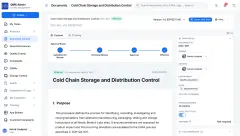
One version in force. Provable on any past date.
How it holds: 11 legal transitions, enforced by a Postgres trigger
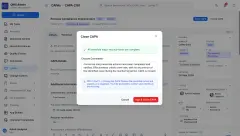
Close the loop, then prove the fix held.
How it holds: No close while a step is open, and never without an e-signature
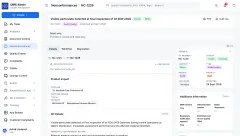
Deviations dispositioned, not just noted.
How it holds: Disposition, notes, linked CAPA, cost and steps — all five checked
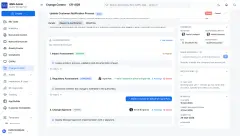
Keep a validated state validated.
How it holds: Status moves only through the server — a database trigger refuses the rest
Program, execution, finding, remediation — closed.
How it holds: Close-out blocked while any finding is open or any clause unscored
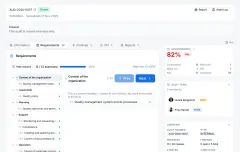
The complaint file a regulator expects.
How it holds: Status is server-owned — a client cannot write it directly
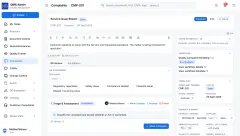
Complaint Management
PartialA support desk that escalates into your QMS.
How it holds: The escalation path a standalone support tool cannot give you
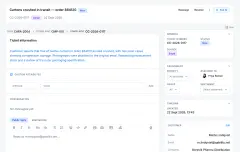
The front door, deliberately low-ceremony.
How it holds: The answer to "our people do not report things"
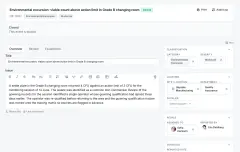
Root Cause Analysis
PartialStructured cause, not a free-text box.
How it holds: Frozen at approval, so later template edits cannot rewrite history
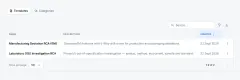
Risk Assessment
PartialScore the risk where the decision is made.
How it holds: Labels frozen at write time, so old assessments stay readable
Shop Floor & Operations
Where quality is actually produced — incoming inspection, sampling, log books, calibrated instruments, retained samples, and the training that keeps people qualified.
Statistical acceptance, on calibrated instruments.
How it holds: Result capture refused on an instrument that is out of calibration
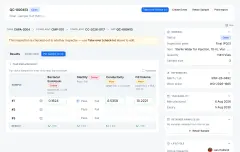
Retain Samples
The reserve-sample record regulators ask for.
How it holds: Retention dates derived from expiry, with a 30-day disposal warning
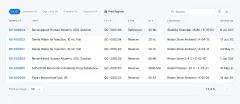
Inspections & Log Books
Logbooks add-onPaper log books become signed, immutable evidence.
How it holds: An append-only revision trigger protecting six columns
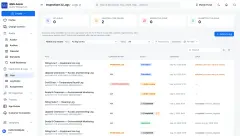
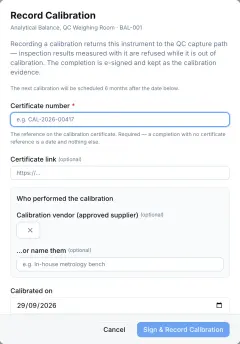
Equipment & Calibration
PartialAn out-of-calibration instrument stops the line.
How it holds: The one place equipment state hard-gates another part of the system
Item Master
The items everything else points at.
How it holds: Specifications scope to an item and its item group
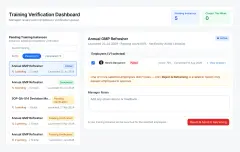
Effective document in, trained people out.
How it holds: Document-driven launches are pinned to the version that became effective
Supply Chain
Your suppliers inside the quality system rather than in an inbox — qualified, monitored, and answering document requests in a portal scoped to their own records.
Supplier Management
PartialQualify, monitor and correct — inside the QMS.
How it holds: Approval steps stay internal even on a supplier-facing record
Supplier Portal
They see their records. Nothing else.
How it holds: Every anonymous supplier endpoint was retired in July 2026
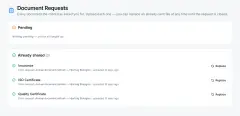
Document Requests
PartialStop chasing certificates by email.
How it holds: The request closes itself when nothing is left pending
Platform & Engine
The machinery everything else runs on: one approval engine, one work inbox, one audit trail — and a builder that lets you add a controlled process of your own without waiting for us.
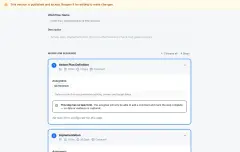
Model the approval once. Reuse it everywhere.
How it holds: Twelve record types run on it, plus every record type you build
Unified Task Inbox
One answer to "what do I owe the quality system today?"
How it holds: Fed by 32 sources across nine areas of the product
App Builder
PartialAdd a controlled process without waiting for us.
How it holds: What you build inherits the same audit trail as what we ship
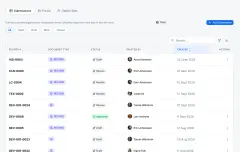
Custom Fields & Option Sets
Extend a record without losing its history.
How it holds: A closed record reads identically after the schema changes
Automation Rules
PartialWhen this happens, do that.
How it holds: Idempotent — a repeated update will not raise a second record
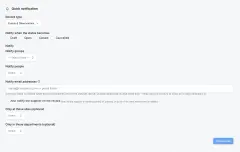
Notifications
Always cc Quality, without anyone remembering to.
How it holds: Arrives live over a replication stream, not a polling loop
Dashboard
What needs you, on the first screen.
How it holds: Every widget gated by the same permission its source area requires
Floor Portal
PartialLogbooks add-onA phone-shaped door for the people on the line.
How it holds: Not a permission check — the routes simply do not exist there
Append-only, and we can prove it.
How it holds: Three independent layers block edits — tested against a superuser
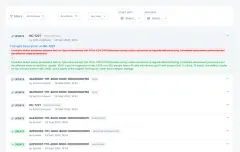
Integrations & Service Accounts
PartialNamed integrations, and machine users for the rest.
How it holds: Service-account keys are stored hashed and shown exactly once
Governance & Administration
Who can see what, across which sites, proven by an append-only record of every permission change.
Roles & Permissions
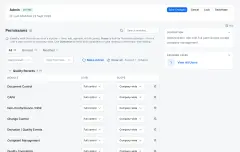
PartialAccess decided per capability, per action, per scope.
How it holds: Every permission change records actor, old scope, new scope and IP
Multi-Site & Departments
Site autonomy with corporate visibility.
How it holds: Site membership is a set, not a single field
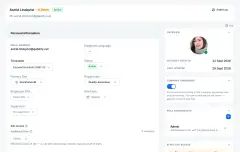
Electronic Signatures
Identity re-verified at the moment of signing.
How it holds: Every signature names exactly one subject record, enforced by a database constraint
User Management
PartialWho exists, and what they may do.
How it holds: Placement is not metadata — it is the access decision
Groups & Teams
Assign to a group, not to a person who might leave.
How it holds: One place to re-point every assignment when a team changes
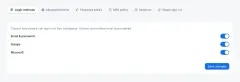
Security Center
PartialCredentials, sessions and devices — under tenant policy.
How it holds: Tenant-configurable login, MFA and session policy
Settings & Lookups
Configure once, applied everywhere.
Lifecycle, enforced
Six record types share one lifecycle. The database holds it, not the form.
Nonconformances, CAPAs, change requests, quality events, internal complaints and audits move through the same four statuses. A status only changes through a server action, and only along the graph.
- Database refusesA status written directly — anything other than a server action — is refused by a database trigger.
- Database refusesA server action can only make the moves in the record’s graph. Anything else is refused.
- Server refusesClosing runs the record’s own checks first — a nonconformance checks five before it closes.
A rejected CAPA, nonconformance or change request goes back to Draft for rework.
| Nonconformance | No cancel action — an NC is closed, not cancelled. |
|---|---|
| CAPA | The shared lifecycle, as drawn. |
| Change request | The shared lifecycle, as drawn. |
| Quality event | Escalating is a link to one record, not a status. |
| Internal complaint | Customer complaints on the support desk keep their own statuses. |
| Audit | Scheduling and fieldwork run on a separate phase track. |
Document versions run their own graph: eleven moves from Draft through review and approval to Effective and Superseded. Document control
Plans differ by headcount, not by capability. From $6,000 a year.
Sold separately: Logbooks, per site / year.
Pick the capability you doubt most. We’ll show it on a call.
- Thirty minutes, on your process
- The Partial ones included
- Straight answers on what it does and doesn’t do